

“A coffeehouse is a place for people who wish to be alone, but need company for it.”
~ Attributed to Joseph Roth (1884–1939)
Joel Bowman with your Notes From the End of the Week: Buenos Aires, Argentina…
We learned a new word this week…
Feuilleton (noun), from the French fuh-yuh-TON, refers to a genre of journalism popular in Central Europe in the late nineteenth and early twentieth centuries, especially in Vienna and Berlin.
Not quite objective reporting… less concerned with precise numbers, facts and statistics (which are, after all, subject to torture by those with an interest in producing them)… though still less interested in pure fictionalizing or editorializing…
The feuilletonist sought not to present the story as, say, a newswire would (or should), but rather as a person immersed in the situation itself, someone interested in capturing the atmosphere or spirit of the moment in a city, where Capital-H History is unfolding, one episode, one character, one scene at a time.
What was it “like” to be in Vienna on the eve of the Great War, for example? Here’s one of our favorite feuilletonists, Stephan Zweig, conveying more than mere dates and names in his marvelous work, The World of Yesterday:
To be perfectly honest, I must confess that there was something fine, inspiring, even seductive in that first mass of outburst of feeling. It was difficult to resist. And in spite of my hatred and abhorrence of war, I would not like to be without the memory of those first days. Thousands and hundreds of thousands of people felt, as never before, what they would have been better advised to feel in peace—that they belonged together. A city of two million, a country of almost fifty million, felt at this moment that they were witnessing history being made, experiencing a moment that would never return, and that everyone was called upon to fling his tiny self into this ardent fire to be cleansed there of all egotism. Differences in social station, language, class and religion were submerged at this one moment in a torrential stream of fraternal feeling. Strangers spoke to one another in the street; people who had avoided each other for years shook hands. Every singe individual felt his own ego enhanced; he was no longer the isolated human being he had been before, he was a part of the whole, one of the people, and his person, formerly ignored, had acquired significance.
Human, Oh So Human
Zweig, along with his fellow feuilletonists Joseph Roth, Alfred Polgar, Karl Kraus and even Walter Benjamin, invited readers into a more intimate, human-centric setting than could be conveyed by the hard-hitting news articles of the day, which paraded themselves, then as now, in the conceit of objectivity. Rather than claim a purchase on a truth too complex for any one observer to grasp, they presented tiles in a mosaic that, when pieced together in the readers’ mind, brought him the impression that he, too, was part of something strange and powerful, yet ultimately inexplicable.
“We are all observers,” the feuilletonist seemed to say, “and here is my version of events, as they are unfolding and as best I can describe them to you.”
No coincidence, then, that the feuilletonist found his place of work in the great kaffeehäuser in Vienna and Berlin, where the most dramatic events of the century were unfolding.
Pulling on this thread earlier in the week, in an amateur nod to the feuilleton, we wondered at the grand events of our own time, and how they are conveyed in the Age of Informational Abundance. With Artificial Intelligence at his fingertips, any man on the street has access to a wealth of data such as never before available, even to his richest, most powerful ancestors. And all in real time.
What does he do with all this data… these statistics… this deluge of numbers and lines of code? Is he any wiser as to the ways of the world? Is he a happier man, a gentler father, a finer thinker? Or is he merely hardened in his ways, ossified in his opinions, more closed than ever, now that he has “the facts” at his fingertips.
We’ll dive into that, and plenty more, in next week’s espresso-powered Notes. For now, please enjoy our last two weeks worth of scribbles, in which we talk trillionaires, market-friendly futures, innovation vs. confiscation and plenty more. Please enjoy, below…
And now for your Notes From the End of the Week…



Final Notes…
It is often said that “the sum is greater than the parts,” and certainly these Notes would be all the less were it not for the growing community of members whose thoughts and insights enliven our comments section.
Herewith, a selection of our favorite member comments from last week’s Notes. First, from our column, The Amsterdam of AI:
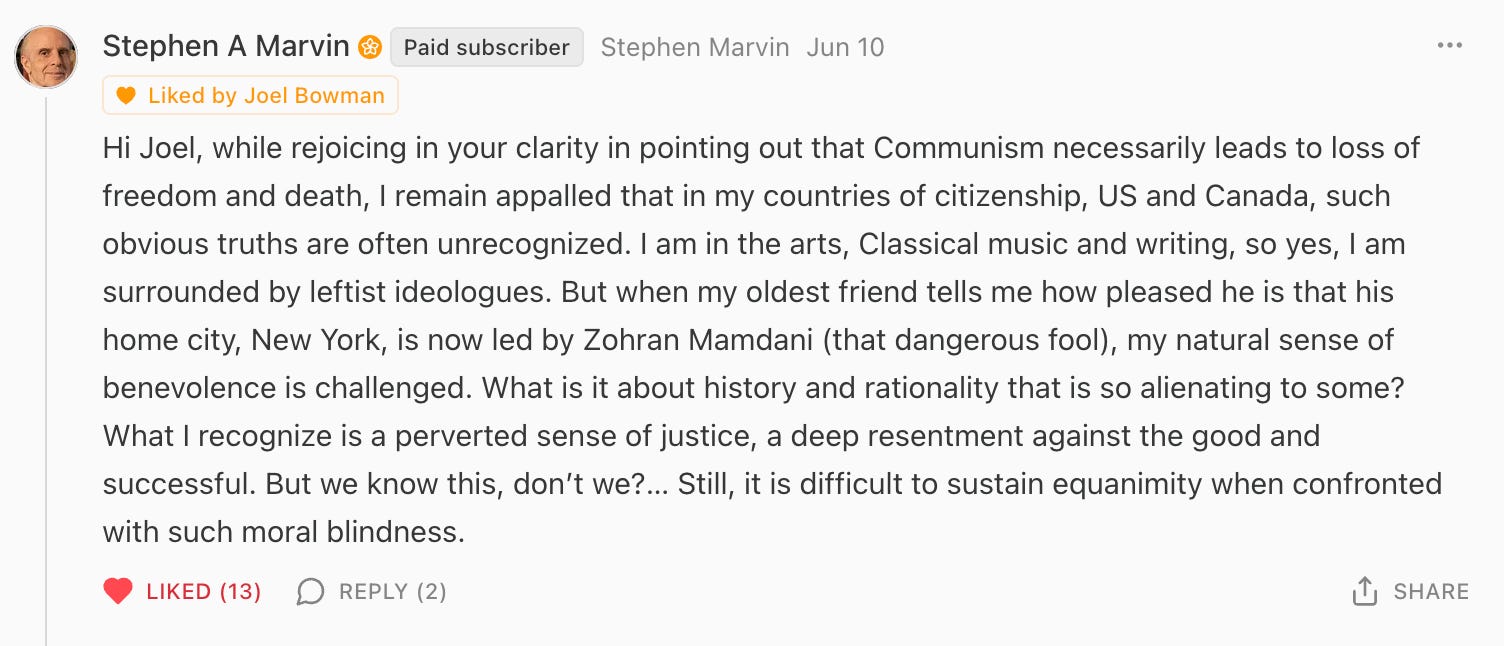
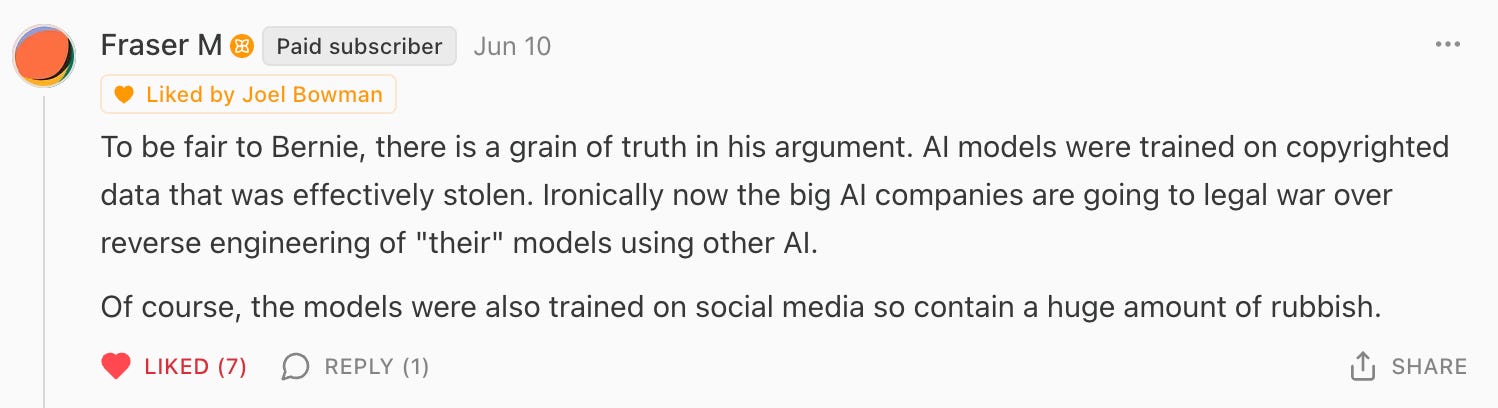
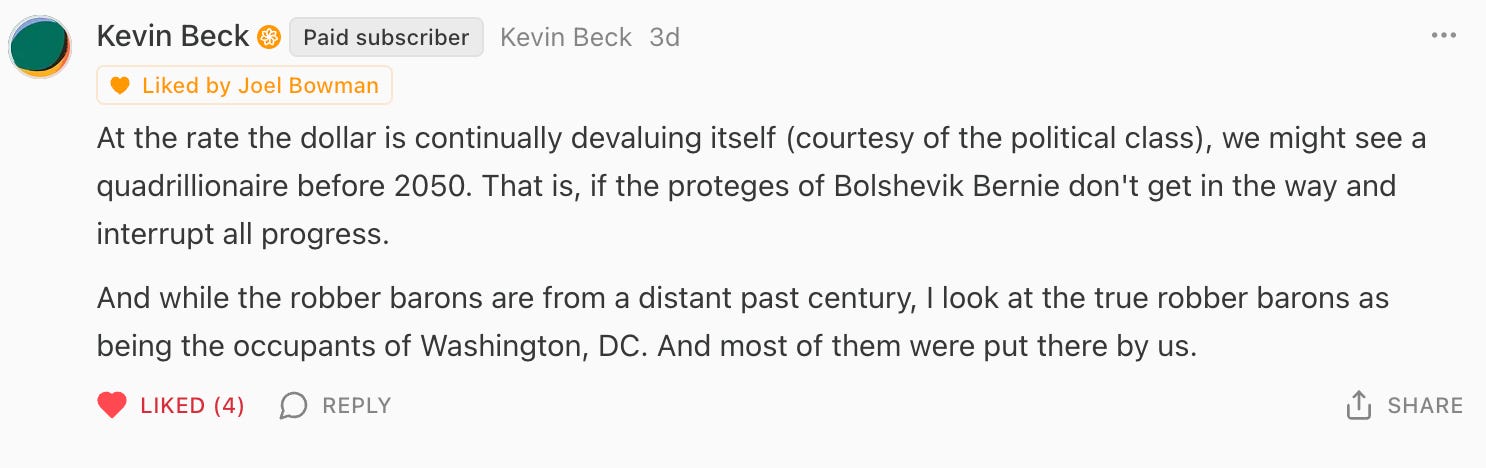
And this, from Who Wants to be a Trillionaire:
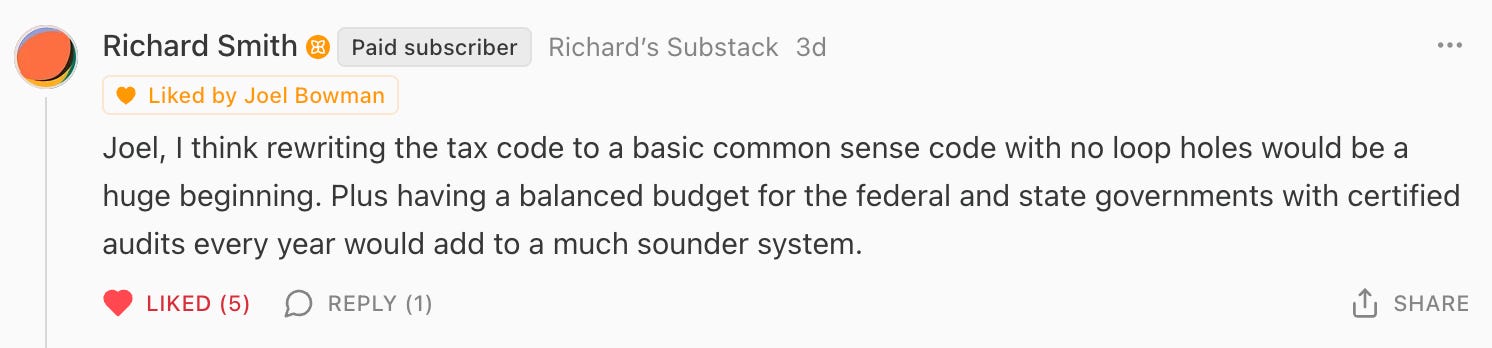
And finally, from our musing on the apparently controversial topic of Artificial Reparations:
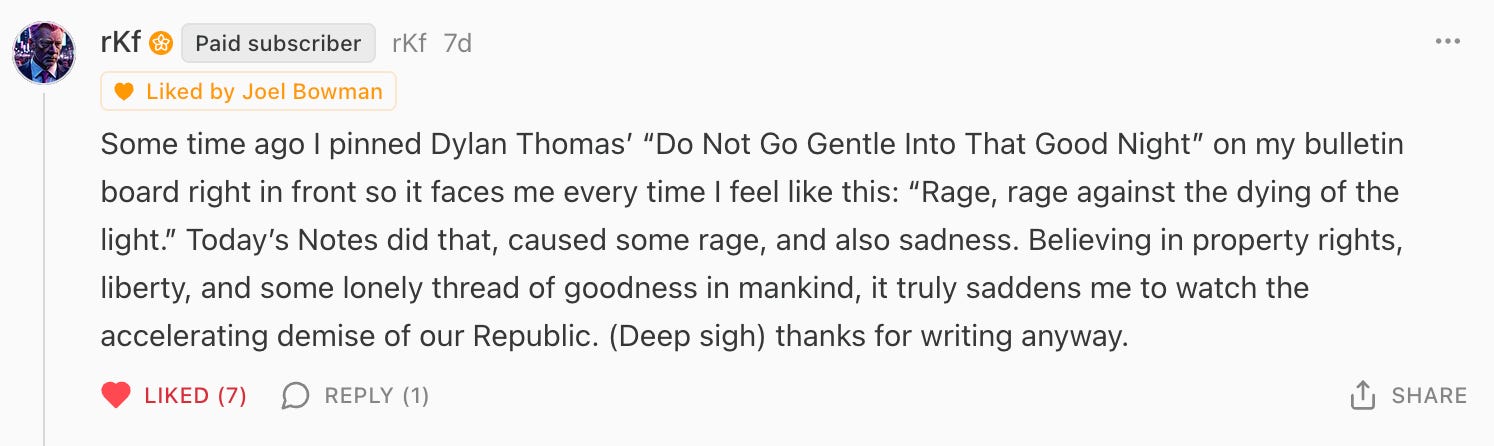

Thanks again to all our Notes members who bring their thoughts and comments to bear on our humble scribbles. We don’t always have time to respond individually, but we do read each and every comment.
If you’re not a member yet, but would like to join our band of cheerful skeptics, independent thinkers and irreverent head scratchers, you can correct that cosmic injustice and have your say on the issues of the day by joining our Notes community right here…
We’ll see you in the comments section next week. Until then, enjoy your weekend…
…and stay tuned for more Notes From the End of the World…
Cheers,
Joel Bowman


